Orphans and Children Deprived of Parental Care
Is there a document restoration service?
Yes, if the child's identification documents are lost, the "Inson" center takes measures to restore them or obtain them for the first time (Appendix No. 2, paragraph 13).
Where is the child placed?
Primarily with relatives (guardianship/sponsorship); if that is not possible, they are placed in a foster family (Appendix 2, paragraph 8).
Is an allowance granted to such children?
Yes, the "Inson" center prepares all documents to ensure the child receives a survivor's benefit or pension (Appendix No. 1, subparagraph "j" of paragraph 6).
How are the child’s property rights protected?
The "Inson" center takes measures to preserve the property left by the missing parents and represents the child's interests in notary offices (Appendix 1, paragraph 6).
What status is given to a child whose parents are missing?
If both parents are officially recognized as missing, the child is formally recognized as a "child deprived of parental care" and registered in the "Ijtimoiy Himoya" Information System (Appendix 2, paragraph 13).
What is the obligation of the judicial authorities in this process?
When courts decide to recognize a person as missing, they must notify the "Inson" center within 24 hours. (Appendix 2, paragraph 5).
Who applies to the court to recognize a parent as missing?
If there is no information about a citizen's whereabouts at their place of residence for one year, the court may declare them missing. The "Inson" center, as the guardianship and sponsorship authority, files a petition to the court to protect the interests of the minor (Appendix 1, paragraph 6).
What is the timeframe for reviewing the application?
Upon receiving information about the absence of parents, the "Inson" center studies the child's situation within 3 working days and takes steps to appoint a legal representative. If no interested party is found, the "Inson" center requests the Internal Affairs Department to initiate a search for the person.
What is the legal basis for this service?
Resolution of the Cabinet of Ministers No. 893 dated December 27, 2024, Presidential Decree No. PF-185, and Article 33 of the Civil Code of the Republic of Uzbekistan.
How long is the training period?
Training courses are organized within the framework of special programs and hours approved by the Center for Advanced Training of Social Protection System Employees.
What is taught in the course?
Psychology of orphaned children, their adaptation to a new family, legal and social responsibility, and upbringing methods (Appendix 7).
How is completion of the course verified?
If the candidate studied at a center within the Agency's system, they do not need to submit a copy of the certificate; the authorized body will retrieve the information independently (Clause 9, Appendix 3).
Where to apply to attend the course?
Directly to the "Inson" social services center or the regional branch of the Agency.
Why is the certificate of course completion necessary?
Candidates must undergo special training to understand issues such as raising orphans and children deprived of parental care, as well as legal obligations. Candidates who have not completed the special courses will not be registered as eligible to take a child into their care.
For whom is the course mandatory?
For individuals wishing to adopt a child, as well as all candidates wishing to take a child into a foster family or professional (therapeutic) family (Clause 6, Appendix 7).
Where should a citizen apply to attend the courses?
Regardless of their place of residence, the candidate can apply to the "Inson" center in the area where it is most convenient for them to attend classes.
What is the legal basis for this service?
Resolution of the Cabinet of Ministers of the Republic of Uzbekistan No. 893, dated December 27, 2024, and Presidential Decree No. PF-185.
What is the processing time for the application?
Within 1 working hour.
Why might an application be rejected?
If a pension has already been assigned; if there are no incapacitated dependent family members; if incapacitated members have turned 18 and are not pupils or students of an educational organization.
How can the money be received?
Via plastic card (transfer to a bank card) or cash (delivered to the mahalla by Xalq Bank staff).
How can I find out the result?
Once the decision (approval or rejection) is made, the result will be sent as an SMS to your mobile phone.
For how long is the allowance granted?
For the period of incapacity for work.
Is there a deadline for submitting applications?
No, there are no time restrictions on accepting applications.
How and where can an application be submitted?
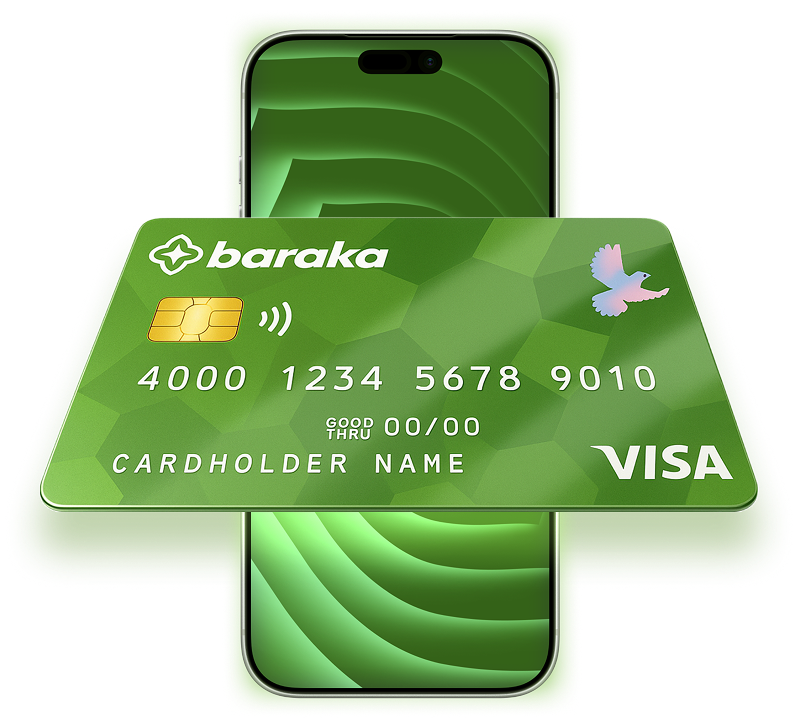
Only online through the Baraka mobile app. Paper documents or visiting the center are not required; only an electronic questionnaire is filled out.
What is the amount of the allowance?
It is set at 820,000 UZS per month, with an additional 270,000 UZS for each subsequent incapacitated family member.
Who is eligible for the allowance?
Incapacitated family members who were dependents of a deceased person who did not have the right to receive a state pension.
What is the legal basis for this service?
Resolution of the Cabinet of Ministers No. 119, dated March 23, 2023.
What is the processing time for the application?
Within one working day.
Does the certificate have an expiration date?
If a candidate has not taken a child for upbringing within three years of receiving the certificate, they are required to undergo the preparatory course again (Clause 26, Appendix 7).
Why is the certificate or reference necessary?
It is a mandatory document to be attached to the application for adopting a child or taking a child into a foster family. The application will not be considered without it.
Is it mandatory to submit the certificate to the “Inson” center?
If the candidate studied at the Center for Advanced Training under the Agency, they do not need to submit a copy — the authorized body will retrieve the information independently (Clause 9, Appendix 3).
When is the certificate or reference issued?
1. A reference is issued by the "Inson" center while the candidate is enrolled and attending offline classes.
2. A certificate is issued within 1 working day after the candidate fully completes the training course at the Center for Advanced Training of Social Protection System Employees (Appendix 7).
What is the legal basis for this service?
Resolution of the Cabinet of Ministers of the Republic of Uzbekistan No. 893, dated December 27, 2024 (Clause 3, sub-clause "b" and Appendix 7).
How is the candidates’ solvency verified?
Information regarding the solvency of the candidate (family) is automatically generated through the system based on scoring assessment results (Clause 3, sub-clause "v" of the decree).
Which authority makes the final decision on establishing an OBU?
As of February 1, 2025, the establishment and termination of family orphanages are carried out based on the decision of the regional branch of the National Agency for Social Protection (the authority of local Hokimiyats has been abolished).
What is the decision-making timeframe?
Within 1 month from the date the candidate applies to the "Inson" center at their place of residence (Appendix 3).
What documents are required for the application?
1. Application (with the consent of both spouses);
2. Medical report on health status;
3. Certificate of completion of the preparatory course (Clause 3).
Where is the application to establish an OBU submitted?
Candidates must apply by visiting the "Inson" social services center in person (Clause 15, Appendix 6).
What is the legal basis for this service?
Resolution of the Cabinet of Ministers No. 893, dated December 27, 2024 (Clause 4 and relevant Regulations).
Who monitors the purchase of clothing?
Employees of the "Inson" social services center assess the child's level of clothing and footwear provision as part of their monitoring (Appendix 3).
What can cause the termination of payments?
When the child turns 18, if the patronage agreement is terminated, or if the child is returned to their parents (Appendix 6).
Are the funds given in cash or to a card?
Payments are transferred to the foster parents' bank card or account in a non-cash form.
What is the purpose of this financial assistance?
State coverage of expenses for providing children with seasonal clothing and footwear.
What is the purpose of this financial assistance?
Starting from 2025, from the funds allocated to the National Agency for Social Protection from the republican budget (Clause 2).
From which source is the allowance provided?
To foster parents who have taken orphans and children deprived of parental care into family care (patronage) (Clause 2).
To whom are the funds for clothing paid?
To foster parents who have taken orphans and children deprived of parental care into family care (patronage) (Clause 2).
What is the legal basis for this service?
Resolution of the Cabinet of Ministers of the Republic of Uzbekistan No. 893, dated December 27, 2024.
Is assistance provided to youths who turn 18 after guardianship ends?
Orphans and children deprived of parental care are included in the "Youth Accompaniment" program and receive social support until the age of 23 (Appendix 11).
What should be done if there is a disagreement with the termination decision?
Interested parties may appeal the "Inson" center's decision in court in accordance with the procedure established by law (Appendix 1, Clause 7).
What happens to the child’s property after guardianship ends?
Within one working day of the termination of guardianship, an act of property transfer and acceptance is drawn up. Note: the child's property remains their personal property, not the guardian's (Appendix 1, Clause 6).
Can a guardian be forcibly removed?
Yes. If the guardian does not perform their duties properly, uses the guardianship for personal gain, or leaves the child unsupervised, the "Inson" center will remove the guardian.
In what cases is a guardian released from their duties?
When the child is returned to the parents, given up for adoption, or if the guardian cannot fulfill their obligations due to health reasons (Appendix 4).
In which cases is guardianship terminated automatically?
When the child reaches the age of 18 (adulthood) (Appendix 4, Clause 34).
What is the timeframe for the decision to terminate guardianship?
After the submission of supporting documents, the decision to terminate guardianship is formalized within one working day (Appendix 4).
What is the legal basis for this service?
Resolution of the Cabinet of Ministers of the Republic of Uzbekistan No. 893, dated December 27, 2024 (Appendix 1, Clause 5; Appendix 4, Clause 34).
Can housing provision be denied?
Queuing can only be denied if it is discovered that the child already owns private property suitable for living.
Where can youths live until housing is provided?
Until housing is provided, measures are taken to provide them with temporary accommodation (rent) or placement in special social housing.
How is the “Youth Accompaniment” program related to this?
Youths who leave institutions or families upon turning 18 receive individual support for housing, employment, and social adaptation under this program until the age of 23 (Appendix 11).
Who manages the housing queue?
As of February 1, 2025, the formation and management of these queues are fully carried out by "Inson" social services centers through the "Unified National Social Protection" Information System.
How is existing housing belonging to the child preserved?
If a house is registered in the child's name, even if they are placed in an institution or a foster family, the guardianship authority takes measures to preserve the house in the child's name and prevent alienation (Appendix 1, Clause 6).
Who is eligible for housing provision?
Orphans who have reached the age of 18, have no housing in their own name, were deprived of parental care, and are registered with the guardianship authority (Appendix 1, Clause 6).
What is the timeframe for determining housing need and queuing?
From the date the child's social status (orphan or deprived of care) is established, the verification of housing need and registration are carried out within one working day through the "Ijtimoiy Himoya" system.
What is the legal basis for this service?
Resolution of the Cabinet of Ministers of the Republic of Uzbekistan No. 893, dated December 27, 2024, and Presidential Decree No. PF-185.
Is establishing guardianship free of charge?
Yes, the state service for establishing guardianship or sponsorship is provided completely free of charge (Clause 85 of the Resolution).
What is preliminary (temporary) guardianship?
In cases of danger to the child's life or emergencies, the child can be placed with a temporary guardian within one working day before all documents are gathered (Appendix 4).
Is the child’s opinion considered when establishing guardianship?
Yes, the consent of a child who has reached the age of 10 is mandatory when appointing a guardian or sponsor.
Who can be a guardian or sponsor?
Only adult, legally capable individuals in good health and with no criminal record. Priority is given to the child's close relatives (Appendix 1, Clause 6).
Who makes the decision on appointing a guardian/sponsor?
As of February 1, 2025, all decisions are made by district (city) "Inson" social services centers (the authority of Hokimiyats has been abolished).
What is the difference between guardianship and sponsorship?
Guardianship (vasiylik) is established for children under 14, while sponsorship (homiylik) is for minors aged 14 to 18.
What is the timeframe for establishing guardianship or sponsorship?
From the date it is determined that a child is deprived of parental care, the issue of appointing a guardian is reviewed within a maximum of one month (in urgent cases, preliminary guardianship is handled in 3 days).
What is the legal basis for this service?
Resolution of the Cabinet of Ministers of the Republic of Uzbekistan No. 893, dated December 27, 2024 (Appendix 4).
Can single individuals (unmarried) adopt?
Yes, single individuals who meet legal requirements (health, income, housing) also have the right to adopt.
Is there follow-up after the child is adopted?
Yes, the guardianship authority regularly monitors the living and upbringing conditions of the adopted child (Appendix 3).
Is it possible to change the child’s name and surname?
Yes, at the request of the adopters, the court's decision can determine that the child be given their surname and that the child's name be changed.
How is the secrecy of adoption maintained?
The secrecy of adoption is protected by law. "Inson" center staff and court officials face criminal liability for disclosing this secret (Appendix 1, Clause 6).
What must be the age difference between the adopter and the child?
The age difference between the adopter and the person being adopted must not be less than 15 years (requirement of the Family Code).
Is the training course mandatory?
Yes, adopters must complete a preparatory course at the center under the Agency and possess a certificate (Appendix 7).
Who makes the final decision on adoption?
Adoption is decided exclusively by the civil courts. The "Inson" center provides a justified conclusion to the court.
How many days does it take to review an adoption application?
After a candidate applies, the assessment of their conditions and the issuance of a conclusion regarding their registration as a candidate are completed within one working day (Appendix 3, Clause 6).
What is the legal basis for this service?
Resolution of the Cabinet of Ministers of the Republic of Uzbekistan No. 893, dated December 27, 2024 (Appendix 5) and the Family Code.
How does patronage differ from adoption?
In patronage, no legal (inheritance) ties are established between the child and the parents; it is considered a contractual agreement for upbringing.
Is the training course mandatory?
Yes, candidates must complete the preparatory course and possess a certificate before taking a child into patronage (Appendix 7).
With whom is the patronage contract signed?
It is signed between the "Inson" center and the persons taking the child into their care (foster parents) (Clause 4).
Are foster parents paid?
Yes. Foster parents receive monthly payments for raising the child, and the child's expenses for clothing and footwear are covered (Clause 2).
Where to apply for patronage?
To the district (city) "Inson" social services center or online via the Single Interactive State Services Portal (my.gov.uz) (Clause 3).
What is the timeframe for taking a child into patronage?
Reviewing the application and entering candidates into the registry is formalized within one working day (provided that documents are complete).
What is the legal basis for this service?
Resolution of the Cabinet of Ministers of the Republic of Uzbekistan No. 893, dated December 27, 2024 (Appendix 6).
What is patronage (foster care)?
It is a form of placing an orphan or a child deprived of parental care into a foster family for upbringing based on a contract.
Is a separate application required for clothing?
No, the contract for taking the child into patronage and the decision of the "Inson" center serve as the basis for the automatic assignment of these payments.
When are the payments stopped?
When the child turns 18, if the patronage contract is terminated, or if the child is returned to their parents (Appendix 6).
How are the expenses monitored?
A social worker from the "Inson" center regularly checks the child's provision of seasonal clothing and footwear during monitoring (Appendix 3).
In what form is the assistance provided?
It is an annual cash payment transferred to the foster parents' bank card or account.
From which source are the funds allocated?
Starting from 2025, from the funds allocated to the National Agency for Social Protection from the republican budget (Clause 2).
To whom is the assistance paid?
To foster parents who have taken orphans and children deprived of parental care into family care (patronage) (Clause 2).
What is the timeframe for granting financial assistance?
After the contract with foster parents is signed, the decision to cover clothing expenses is formalized within one working day.
What is the legal basis for this service?
Resolution of the Cabinet of Ministers of the Republic of Uzbekistan No. 893, dated December 27, 2024 (Clause 2).
Is there a fee for formalization?
No, all state services for formalizing guardianship and sponsorship are provided free of charge.
Is the child’s opinion consulted?
Yes, the consent of a child who has reached the age of 10 is mandatory when appointing a guardian or sponsor (Appendix 1).
Who is given priority in formalizing guardianship?
Priority is given primarily to the child's close relatives (grandparents, siblings, uncles, and aunts) (Appendix 1, Clause 6).
What documents are required to become a guardian/sponsor?
An application, a medical report on health status, and (in case of adoption) a training course certificate. Other information (criminal record, income, housing) is retrieved automatically from the system.
Which authority formalizes the guardianship?
As of February 1, 2025, the authority of district (city) Hokimiyats has been abolished, and guardianship is formalized by the decision of "Inson" social services centers.
Where and how is the application submitted?
Candidates can apply in person at "Inson" centers or online via the Single Interactive State Services Portal (my.gov.uz) (Clause 3).
What is the timeframe for formalizing guardianship?
In urgent cases (preliminary guardianship), documents are processed within one working day. The general assessment and appointment process are carried out promptly through the system.
What is the legal basis for this service?
Resolution of the Cabinet of Ministers of the Republic of Uzbekistan No. 893, dated December 27, 2024 (Appendix 4).
When are the payments stopped?
When the child reaches adulthood (18 years), when the OBU is terminated, or if the child is returned to their parents.
How are the expenses monitored?
The "Inson" social services center checks the targeted use of funds and the level of provision for the children as part of its monitoring.
Where are the funds deposited?
The funds are transferred monthly to the bank card or personal account of the parents who established the OBU.
Are the OBU parents also paid a salary?
Yes, parents who establish an OBU are also paid a salary (labor remuneration) for raising the children in the amount specified by law.
From which source are the funds paid?
Starting from 2025, from the funds allocated to the National Agency for Social Protection from the republican budget (Clause 2).
What do the living expenses include?
Funds spent on children's food, clothing, footwear, soft goods, and personal hygiene products (Clause 2).
What is the timeframe for granting the allowance (funds)?
After the regional branch of the Agency issues a decision to establish an OBU, the formalization of payments is completed within one working day.
What is the legal basis for this service?
Resolution of the Cabinet of Ministers of the Republic of Uzbekistan No. 893, dated December 27, 2024 (Clause 2 and the Regulation on OBU).
Are separate receipts (reports) required for clothing?
No, the funds are provided as a monthly allowance; however, the social worker checks the child's provision during monitoring (Appendix 3).
When are the payments stopped?
When the child turns 18, if the patronage contract is terminated, or if the child is returned to their parents (Appendix 6).
How is the allowance amount determined?
Foster parents (patronage) are paid:
• 1.5 times the minimum wage (MROT) monthly for the care and maintenance costs of each foster child;
• 3 times the minimum wage (MROT) once a year for the purchase of clothing and footwear for foster children.
In what form are the payments made?
By transferring money monthly to the foster parents' bank card or personal account.
From whose funds are the payments made?
Starting from 2025, from the funds allocated to the National Agency for Social Protection from the republican budget (Clause 2).
What do the payments include?
1. Monthly payment for child care (food and other supplies);
2. Expenses for providing the child with clothing and footwear (Clause 2).
What is the timeframe for granting the allowance (payments)?
After the contract for placing the child in patronage (foster care) is signed, the formalization of payments is completed within one working day.
What is the legal basis for this service?
Resolution of the Cabinet of Ministers of the Republic of Uzbekistan No. 893, dated December 27, 2024 (Clause 2).
What happens after being included in the list?
Information about children in need of alternative placement is provided to the candidate through the "Ijtimoiy Himoya" Information System, and the selection process begins.
Can inclusion in the list be denied?
Yes, if the candidate has medical contraindications, if their housing conditions do not meet the requirements, or if they fail the scoring assessment.
Why is the training course certificate mandatory?
To confirm the candidate's psychological and legal readiness to raise a child. Without it, entry into the candidates' registry is impossible (Appendix 7).
What information does the system identify automatically?
Information regarding criminal records, marital status, housing ownership, and solvency (scoring) is retrieved automatically from the system (Clause 3, sub-clause "v").
What documents are required to enter the list?
1. Application;
2. Medical report (VCC);
3. Training course completion certificate (for adoption and foster care) (Clause 3).
Where and how is the application submitted?
Candidates apply in person at an "Inson" social services center or online via the Single Interactive State Services Portal (my.gov.uz) (Clause 3).
What is the timeframe for registration as a candidate?
After the application is submitted and all checks are completed, the decision to register the person as a candidate is formalized within one working day (Clause 6, Appendix 3).
What is the legal basis for this service?
Resolution of the Cabinet of Ministers of the Republic of Uzbekistan No. 893, dated December 27, 2024 (Appendix 3).
Can the child’s property be sold?
Only in exceptional cases, if it is absolutely necessary for the preservation of the child's life and health and if there is a positive conclusion from the guardianship authority.
How is the conclusion transmitted?
As of February 1, 2025, all conclusions are sent to notary offices in digital form via the "Electronic Government" system within one working day.
How is the property accounted for?
Immediately upon identification of the child, all their property subject to state registration is electronically recorded in the "Ijtimoiy Himoya" Information System (Appendix 2, Clause 21).
What are the powers of the guardianship and trusteeship authority in this regard?
The "Inson" center takes measures to preserve the child's property and participates in protecting their property interests in notary offices (Appendix 1, Clause 6).
Why is this conclusion necessary?
To confirm that the child's interests are not violated during notary transactions such as the sale, gift, or exchange of movable and immovable property registered in the child's name.
What is the timeframe for providing the conclusion?
From the day the request from the notary office is received, the study of the child's property interests and the issuance of a conclusion are formalized within one working day.
What is the legal basis for the service?
Resolution of the Cabinet of Ministers of the Republic of Uzbekistan No. 893, dated December 27, 2024 (Appendix 1, Clause 6, sub-clause "j").
Is a separate permit required for every expense?
Generally, a general permit is issued for a specific period (e.g., one year) to receive monthly payments for the child's daily needs. A separate permit may be required for large purchases.
What are the consequences of using the money without a permit?
If the guardian spends the funds contrary to the child's interests, the guardianship authority will deny the permit and consider removing the guardian from their duties (Appendix 1).
In what form is the permit issued?
As of February 1, 2025, the permit is generated digitally through the "Ijtimoiy Himoya" Information System and sent to banks, rather than in paper form.
Where to apply for a permit?
Applications can be made to the district (city) "Inson" social services center or online via the Single Portal (my.gov.uz).
Why can’t the guardian use this money at their own discretion?
To protect the child's property rights. The guardian is obligated to spend the funds exclusively on the child's maintenance, education, and health (Appendix 4).
What is meant by “social payments”?
Pensions, allowances, and alimony assigned to the child, as well as income derived from their property (e.g., the child's share of rental income).
What is the timeframe for issuing the permit?
Following an application by the guardian or sponsor, the child's needs are assessed, and the permit is formalized in electronic form within one working day.
What is the legal basis for this service?
Resolution of the Cabinet of Ministers of the Republic of Uzbekistan No. 893, dated December 27, 2024 (Appendix 1, Clause 6, sub-clause "d").
Is there a fee for the service?
The service of issuing a decision and providing a conclusion on emancipation by the "Inson" center is provided free of charge.
Are those who enter into marriage also emancipated?
According to the law, persons who enter into a legal marriage before reaching the age of 18 are automatically considered fully legally capable from the time the marriage is registered.
Do the obligations of an emancipated person change?
Yes, they become independently liable for their obligations (e.g., for damages caused or debts). Parents are no longer responsible for their actions.
What if the parents do not agree to the emancipation?
In the absence of consent from parents or guardians, declaring a minor fully legally capable is carried out only through court proceedings.
Where to apply for the decision?
To the district (city) "Inson" social services center or online via the Single Portal (my.gov.uz).
What is the timeframe for reviewing the application?
If parents give their consent, the decision of the guardianship authority ("Inson" center) is formalized within one working day.
What are the main requirements for emancipation?
The person must be working under an employment contract or, with the consent of parents (guardians), be engaged in entrepreneurial activities.
At what age is emancipation possible?
Emancipation is applicable to minors who have reached the age of 16.
What is the legal basis for this service?
Resolution of the Cabinet of Ministers No. 893 (Appendix 1, Clause 6, sub-clause "v") and Article 28 of the Civil Code of the Republic of Uzbekistan.
What is emancipation and what does it grant?
It is the acquisition of all civil rights and obligations (signing contracts, disposing of property, etc.) by a person under 18, just like an adult.
What is the legal basis for providing the service?
Paragraphs 9, 19, and 30 of the Administrative Regulation approved by Resolution No. 354 of the Cabinet of Ministers of the Republic of Uzbekistan dated June 25, 2024.
Is there a fee for this assistance?
No, the guardianship authority's participation in courts and the issuance of conclusions is a free state service.
Can the “Inson” center file a lawsuit in court?
Yes, if there is a threat to the child's life and health, the center can independently petition the court to restrict parental rights or remove the child from the family.
Is the child’s opinion considered in court?
Yes, the social worker specifically studies the opinion of a child who has reached the age of 10 and presents it to the court (Appendix 1, Clause 6).
What information does the social worker provide to the court?
An electronic assessment report regarding the child's living conditions, family environment, the child's relationship with the parents, and the child's own opinion.
In which types of court cases is the participation of a social worker mandatory?
In all cases concerning the determination of the child's place of residence, deprivation (or restoration) of parental rights, adoption, and removal of a child.
What is the timeframe for submitting a conclusion to the court?
Upon receiving a court request, the social worker assesses the situation, prepares a justified conclusion within one working day, and submits it to the court.
In what capacity does the social worker participate in court?
An employee of the "Inson" social services center participates as a representative of the guardianship and sponsorship authority to protect the child's best interests.
What is the legal basis for this service?
Resolution of the Cabinet of Ministers of the Republic of Uzbekistan No. 893, dated December 27, 2024 (Appendix 1, Clause 6, sub-clause "z").
Can the rejection be appealed?
Yes, parties dissatisfied with the conclusion of the "Inson" center can appeal to the court in accordance with the procedure established by law.
Can the guardianship authority deny issuing a conclusion?
Yes, if changing the surname is contrary to the child's best interests (e.g., if it affects inheritance rights), a rejection is issued.
Can the application be submitted online?
Yes, the application can be sent through the Single Portal (my.gov.uz), and the conclusion will also be sent to the Civil Registry office electronically.
Is there a fee for the service?
No, providing a conclusion to the Civil Registry office by the "Inson" center is completely free of charge.
What names are given to children whose parents are unknown?
In such cases, the first name, surname, and patronymic are given based on the conclusion sent by the "Inson" center to the Civil Registry office (Appendix 2).
At what age is the child’s consent required?
The consent of a child who has reached the age of 10 is mandatory to change their surname.
In which cases is the conclusion of the guardianship authority mandatory?
If parents cannot agree on the child's name, or if it is requested to change the surname of a child under 18.
What is the timeframe for providing the conclusion?
It is formalized in electronic form within one working day from the date the application is received.
What is the legal basis for this service?
Resolution of the Cabinet of Ministers No. 893 (Appendix 1, Clause 6, sub-clause "i") and the Family Code of the Republic of Uzbekistan.
What is the main purpose of this service?
Confirmation by the guardianship authority ("Inson" center) that the child's rights and interests will not be violated when changing their name or surname.
What are the consequences of illegal disposal of property?
If the guardian or third parties cause damage to the child's property, the "Inson" center files a lawsuit in court to protect the child's interests.
Is there a fee for the service?
No, the service provided by the guardianship authority to account for and monitor the child's property is free of charge.
What happens to the property when the child reaches adulthood (18 years old)?
Upon termination of guardianship, the right to fully dispose of all property is transferred back to the child within one working day (based on an official act).
Is the registered property monitored?
Yes, the social worker checks the preservation of the child's property at least once a year and enters the results into the "Ijtimoiy Himoya" Information System.
What is the role of the notary in disposing of the property?
The notary approves transactions regarding the child's property only if there is a positive conclusion sent by the "Inson" center through the system within one working day.
Under what conditions is the sale of property allowed?
Only if it serves the child's best interests (e.g., if it is necessary for the child's medical treatment or if a smaller house is sold to buy a larger one in the child's name).
Can a guardian sell the child’s property (e.g., a house)?
No, the guardian cannot sell the child's property at their own discretion. Any transaction requires written permission (conclusion) from the "Inson" center.
Where is the information about the child’s property obtained from?
The social worker of the "Inson" center automatically retrieves data through the databases of the Cadastre, Traffic Safety Department (GAI), banks, and other agencies (Appendix 2, Clause 21).
What is the timeframe for registering property?
All property of the child is recorded in the system within one working day from the date the child is identified as needing social protection (orphan or deprived of care).
What is the legal basis for this service?
Resolution of the Cabinet of Ministers of the Republic of Uzbekistan No. 893 (Appendix 1, Clause 6, sub-clauses "j" and "l").
Does assistance continue after leaving the “Mother’s Home”?
Yes, once the woman leaves the center, the "Inson" center continues to monitor her employment status and overall social condition.
Is the woman’s identity kept confidential?
Yes, the confidentiality of the personal data of the woman and child placed in the "Mother's Home" is strictly guaranteed.
Is there a fee for the service?
No, "Mother's Home" services are provided by the state completely free of charge (Clause 2 of the Resolution).
What kind of assistance is provided in the “Mother’s Home”?
Provision of shelter, food, medical care, psychological support, and social integration of the mother through vocational training.
How long can one live in the “Mother’s Home”?
Until the social situation of the woman and child improves (usually from 6 months to 1 year); however, this period is determined based on an individual development plan.
Where should one apply for placement?
To the district (city) "Inson" social services center or online via the Single Portal (my.gov.uz).
Who can be placed in the “Mother’s Home”?
Pregnant women in difficult social circumstances, and mothers with children under 3 years old who have no place to live or have been victims of domestic violence.
What is the timeframe for the placement decision?
After the woman or her relatives apply, the situation is assessed, and the issuance of a referral is decided within one working day.
What is the legal basis for this service?
Resolution of the Cabinet of Ministers of the Republic of Uzbekistan No. 893 (Appendix 1, Clause 6, sub-clause "b").
What is the “Mother’s Home” and what is its purpose?
It is a center aimed at preventing child abandonment by providing shared accommodation and support for women in difficult social situations and their infants.
What is the purpose?
The main purpose is to prevent the child from being placed in an infant home and to preserve them within a family environment.
Is the woman’s identity kept confidential?
Yes, the confidentiality of the personal data of the woman and child staying at the center is strictly guaranteed by law.
Is the mother taught a profession?
Yes, to help the mother live independently in the future, assistance is provided in vocational training and employment.
Are the services free of charge?
Yes, accommodation, food, and psychological support are provided by the state completely free of charge.
Where should one apply?
To the regional "Inson" social services center or online via the Single Portal (my.gov.uz).
How long can one live in the “Mother’s Home”?
Until the social situation of the mother and child stabilizes (usually for a period of 6 months to 1 year).
What is the timeframe for the placement decision?
After assessing the woman's situation, the issuance of a referral is decided within one working day.
Who can be placed here?
Pregnant women in difficult social circumstances (homeless, victims of violence) and mothers with children under 3 years old.
What is the legal basis for this service?
Resolution of the Cabinet of Ministers of the Republic of Uzbekistan No. 893 (Appendix 1, Clause 6, sub-clause "b").
What is “Onalar Maskani”?
It is a center aimed at preventing child abandonment by providing shared accommodation and support for women in difficult social situations and their infants.
Can the issuance of a recommendation be denied?
Denial occurs only if the person's status as an "orphan or child deprived of parental care" is not confirmed in the system.
Is it necessary to collect documents to confirm the status?
No, if the child is registered in the "Inson" center's database, the system automatically confirms their status as an orphan (Appendix 2).
Is there financial assistance after admission?
Yes, orphaned children admitted on a state grant basis are guaranteed a stipend and separate payments for clothing and footwear during their studies.
Is the privilege only for undergraduate (Bachelor’s) studies?
Yes, this privilege is primarily applied for admission to the undergraduate level of higher education institutions.
In what form is the recommendation issued?
As of February 1, 2025, recommendations are no longer issued in paper form; instead, they are automatically sent to the database of the Agency for Knowledge and Skills Assessment (DTM) via the "Ijtimoiy Himoya" system.
Where is the application submitted?
To the district (city) "Inson" social services center or online via the Single Portal (my.gov.uz).
What is the essence of the privilege?
Candidates are granted the right to participate in the selection process within a separate quota allocated for orphaned children in HEI (Higher Education Institution) entrance exams.
Within how many days is the referral (recommendation) issued?
After the candidate applies, their social status is verified, and an electronic recommendation is generated within one working day.
Who is eligible for the privileged referral?
Orphans and children deprived of parental care who are under full state support (including children under guardianship, sponsorship, or patronage).
What is the legal basis for this service?
Resolution of the Cabinet of Ministers of the Republic of Uzbekistan No. 893 (Appendix 1, Clause 6, sub-clause "m") and the current legislation on privileges.